How to Safely Pack a Charcoal Briquette Shipping Container
Currently, exporting quality coconut charcoal requires strict safety protocols to prevent self-heating during long ocean transit. Therefore, selecting the right charcoal briquette shipping container remains crucial for maintaining product quality and ensuring safety. Moreover, experienced exporters must always monitor specific temperature and moisture conditions inside the cargo hold. Consequently, global buyers should partner with reliable manufacturers who guarantee safe charcoal briquette shipping practices.
International Safety Regulations
Currently, global maritime agencies class charcoal as a hazardous substance due to self-heating risks. Therefore, shipping lines strictly enforce the International Maritime Dangerous Goods code for all shipments.
Consequently, exporters must complete a self-heating test before booking any container space. Thus, this test ensures that the briquettes will not ignite during ocean transit.
Hazard Classification and SP141
Specifically, charcoal falls under the Dangerous Goods Class 4.2 category. In addition, Special Provision 141 regulates the international transport of carbon-based products.
However, compliant manufacturers can easily obtain exemptions by passing rigorous laboratory tests. Therefore, choosing a certified factory prevents costly shipping delays at port.
Dangerous Goods Declaration
Moreover, ocean carriers mandate a complete Dangerous Goods Declaration for every booking. Thus, you must provide accurate safety data sheets before the vessel departs.
Furthermore, local customs officers can inspect the cargo at any moment. Consequently, keeping your safety documentation updated prevents administrative penalties or cargo rejection.
Vanning Survey Requirements
In addition, an independent inspector must physically witness the container loading process. Therefore, they will issue a formal vanning survey certificate upon completion.
Currently, this certificate proves that the factory packed the goods safely. Thus, shipping lines will not accept your cargo without this critical document.
- Dangerous Goods Class 4.2 compliance documentation
- Special Provision 141 laboratory test reports
- Certified vanning survey inspection certificates
- Updated Material Safety Data Sheets for customs
Moisture Control and Packaging
Currently, moisture remains the primary enemy of coconut charcoal during sea transit. Therefore, manufacturers must use advanced barrier packaging to protect the briquettes from humidity.
In addition, high moisture levels significantly degrade the burning performance of the briquettes. Thus, maintaining dry conditions preserves the premium quality of your product.
Inner Plastic Barrier Protection
Specifically, factories seal the briquettes inside thick polyethylene inner bags. However, these bags must have airtight seals to prevent moisture ingress effectively.
Consequently, the inner plastic liner blocks humid sea air during long voyages. Therefore, your briquettes stay completely dry and ready for immediate retail sale.
Master Carton Durability
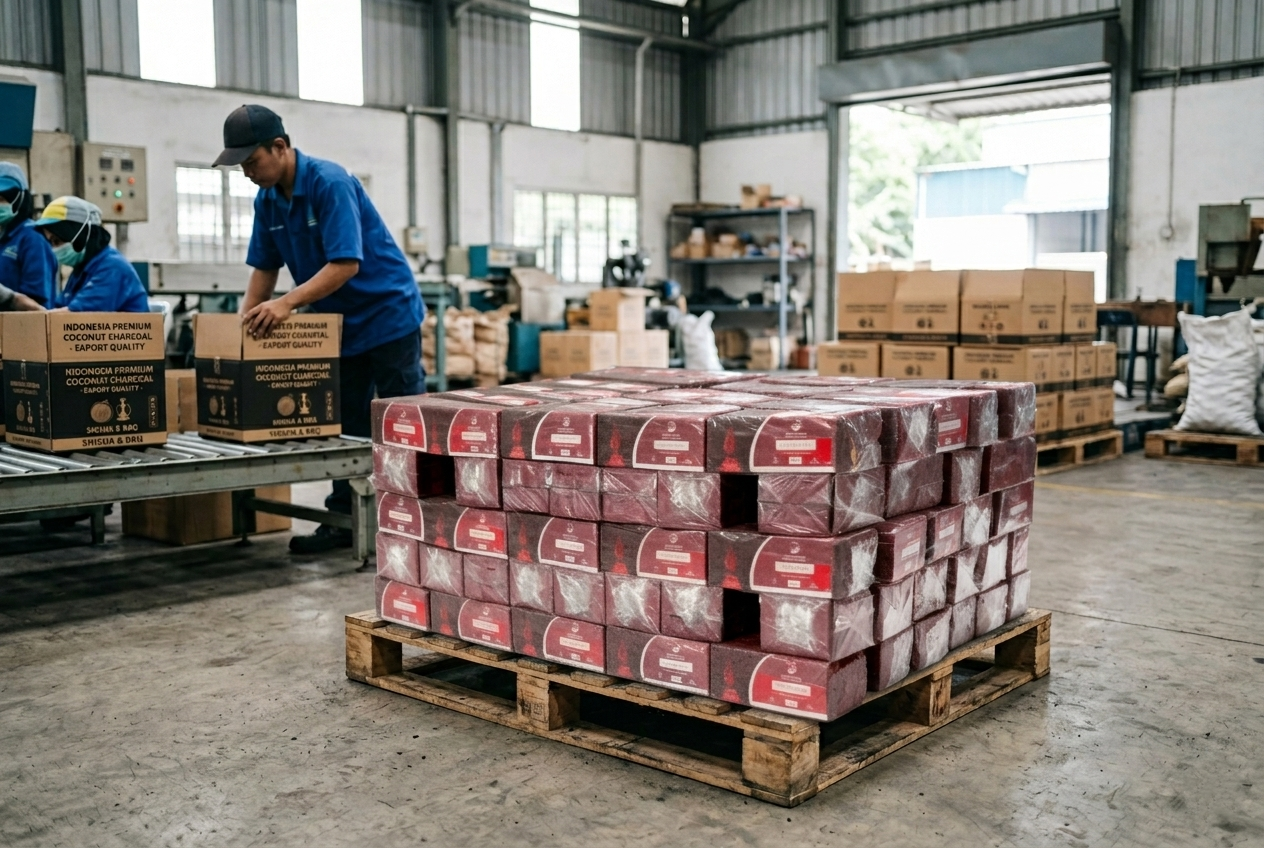
Moreover, standard cardboard boxes can quickly weaken when exposed to humid sea air. Thus, exporters must utilize double-wall corrugated master cartons for optimal strength.
Furthermore, these durable cartons prevent physical damage during stacking inside the vessel. Consequently, your retail packaging remains pristine and undamaged upon arrival.
Silica Gel and Desiccants
In addition, temperature changes inside the container can cause condensation or container rain. Therefore, placing high-absorption silica gel poles inside the cargo solves this problem.
Currently, these desiccants actively extract excess water vapor from the internal atmosphere. Thus, they protect the cardboard packaging from softening and collapsing during transit.
- Double-wall corrugated boxes for heavy stacking
- High-density polyethylene inner plastic bags
- Industrial silica gel poles for condensation control
- Strict raw material moisture control under ten percent
Freight Logistics and Costs
Currently, planning your shipping logistics properly can save thousands of dollars in freight costs. Therefore, you must choose the right container size and routing for your cargo.
Moreover, dangerous goods transport involves unique surcharges that affect your final landing cost. Thus, understanding these fees helps you calculate accurate retail pricing.
Selecting Container Sizes
Specifically, twenty-foot containers are ideal because coconut briquettes are extremely heavy. Consequently, a small container easily reaches the maximum legal road weight limits.
However, forty-foot containers are useful for light, high-volume retail shipments. Therefore, you must analyze your total order volume before booking container space.
Ocean Freight Rate Factors
In addition, global shipping rates fluctuate constantly based on seasonal demand and fuel prices. Thus, signing long-term freight agreements can protect your business from price hikes.
Furthermore, shipping lines apply extra dangerous goods surcharges for charcoal cargo. Consequently, you must budget for these administrative fees in your cost sheets.
Transit Time and Routing
Moreover, shorter transit times reduce the risk of cargo degradation and heating. Therefore, importers should always prefer direct shipping routes over multi-port transshipments.
Currently, direct routes minimize physical container handling at intermediate ports. Thus, your valuable goods arrive much faster and with minimal risk of damage.
- Heavy-duty twenty-foot container options for maximum payload
- Dangerous goods ocean freight surcharges and fees
- Direct sea routes for faster delivery times
- Demurrage and detention free-time negotiations at ports
Loading and Stuffing Practices
Currently, improper container stuffing can lead to catastrophic cargo damage during rough sea transit. Therefore, loading crews must follow strict physical distribution guidelines.
In addition, balanced weight distribution prevents the container from tilting on the vessel. Thus, safe loading practices protect both the cargo and the crew.
Weight Distribution
Specifically, workers must spread the heavy pallets evenly across the entire floor. Consequently, this method prevents excessive pressure on any single point of the container.
However, putting all weight on one side can cause severe transport accidents. Therefore, the loading plan must detail the exact position of every single pallet.
Dunnage and Securing
Moreover, empty spaces inside the container allow the pallets to shift during transit. Thus, crews must insert heavy-duty inflatable dunnage bags between the pallets.
Furthermore, strong polyester straps secure the rear pallets to the container walls. Consequently, this security system prevents the goods from falling when doors open.
Ventilation Management
In addition, proper airflow inside the container helps dissipate any potential heat buildup. Therefore, workers must never block the container ventilation holes with packaging material.
Currently, keeping these vents clear allows fresh air to circulate naturally. Thus, the internal temperature remains stable throughout the warm equatorial sea journey.
- Inflatable dunnage bags to fill empty spaces
- Polyester cargo straps for secure pallet bracing
- Even weight distribution planning for vessel safety
- Unblocked container vents for natural air circulation
Shipping Safety Queries
How do you prevent charcoal from self-heating?
Currently, we control the moisture and volatile matter during the carbonization process. Therefore, the finished briquettes maintain a stable temperature during long-term storage.
In addition, we use airtight packaging to block external oxygen. Thus, this method eliminates the risk of self-heating inside the container.
What documents do I need for customs?
Specifically, you need an MSDS, self-heating test report, and vanning certificate. Consequently, these documents prove that your cargo complies with maritime safety codes.
Moreover, your freight forwarder must submit these files to the shipping line. Therefore, completing this documentation early ensures hassle-free customs clearance.
Can I ship charcoal in standard containers?
However, shipping lines only accept charcoal in heavy-duty, dry van containers. Thus, you cannot use standard light-weight container models for this heavy cargo.
Furthermore, the container must pass a strict physical inspection before loading. Consequently, this inspection guarantees that the structural integrity remains perfectly intact.
- Material Safety Data Sheet documentation
- Self-heating test certificate of compliance
- Vanning survey inspection report
- Commercial invoice and packing lists
Secure Your Supply Chain
Currently, finding a reliable supplier who understands dangerous goods logistics is challenging. Therefore, we provide fully certified logistics services for all our international partners.
In addition, we guarantee premium quality and strict compliance with global maritime safety standards. Thus, you can expand your business with absolute peace of mind.
Consequently, you should contact our professional team today to secure your cargo booking. Moreover, our experts will assist you with customs documentation and ocean freight logistics.
- Certified self-heating compliant coconut charcoal
- Fully managed hazardous goods logistics services
- Double-wall packaging for premium retail protection
- Guaranteed container space with top shipping lines
Premium Coconut Briquette
Konsultasi GRATIS via WhatsApp: 081330309180
Website: https://premiumcoconutbriquette.com/