Understanding the Sustainable Coconut Charcoal Production Process From Shells
Modern industries highly value sustainable energy alternatives because they reduce environmental degradation significantly. Many manufacturers now focus on the Coconut Charcoal Production Process to create high-quality, eco-friendly fuel. Consequently, this eco-friendly method successfully transforms agricultural waste into highly efficient heat sources. Therefore, global markets increasingly demand premium Coconut Charcoal Production.
Selecting Premium Organic Raw Materials
However, the final quality of the briquettes depends heavily on the initial selection of the shells. Clean, mature coconut shells provide the best carbon content for manufacturing. Therefore, sourcing teams must inspect the raw materials thoroughly before processing.
Additionally, workers must remove any remaining fiber or husk from the shells. This crucial step prevents excessive ash production during the combustion stage. Thus, clean shells ensure a much cleaner burn for consumers.
Moreover, manufacturers prefer shells from coastal areas due to their high density. High-density shells yield stronger charcoal that burns much longer. Consequently, raw material selection directly determines the burning efficiency.
- Shell maturity checks.
- Husk removal procedures.
- Moisture level assessments.
- Density checks for coastal shells.
Methods for Effective Pyrolysis and Carbonization
Moreover, the carbonization phase requires precise temperature control to convert shells into high-grade charcoal. Specialized drum kilns heat the materials in oxygen-depleted environments. Consequently, this thermal process successfully eliminates volatile organic compounds.
Furthermore, maintaining consistent heat ensures the structural integrity of the resulting charcoal. Uneven heating often leads to fragile pieces that break easily during transport. Therefore, operators monitor the kiln temperatures continuously.
Indeed, modern factories use eco-friendly carbonization systems that capture harmful smoke. These advanced systems burn the released gases to heat the kilns. Thus, the production facility reduces its carbon footprint significantly.
- Oxygen-free heating environments.
- Rotary kiln technology.
- Temperature range calibration.
- Eco-friendly smoke filtration.
Crushing and Mixing Procedures for Briquetting
Besides that, the cooled charcoal must undergo a thorough crushing process. Industrial crushers grind the carbonized shells into fine powder particles. Thus, this uniform powder size allows for better bonding during extrusion.
Consequently, manufacturers mix this fine powder with natural binders like tapioca starch. They avoid using chemical additives to keep the product completely non-toxic. Therefore, the resulting mixture remains safe for indoor cooking.
Alternatively, workers carefully measure the water-to-starch ratio to achieve the perfect consistency. Incorrect proportions can cause the briquettes to crack during drying. Hence, precise measurement is crucial for quality control.
- High-speed hammer mills.
- Natural binder integration.
- Water ratio adjustments.
- Precision blending machines.
Molding and High-Pressure Extrusion Stage
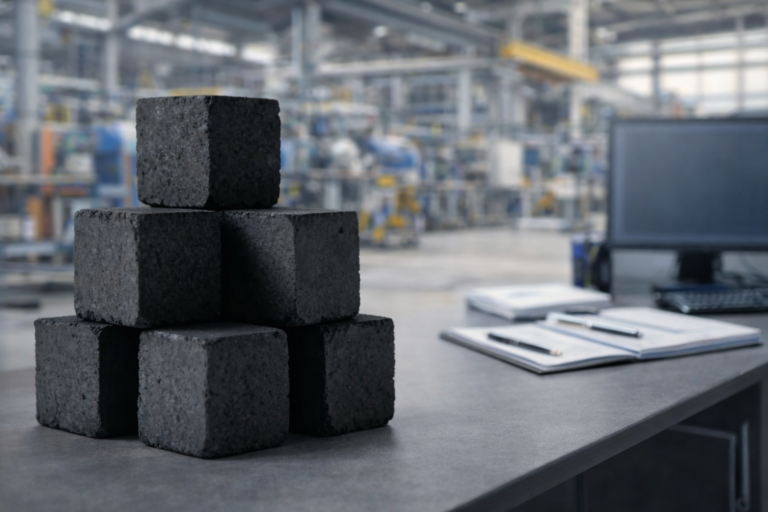
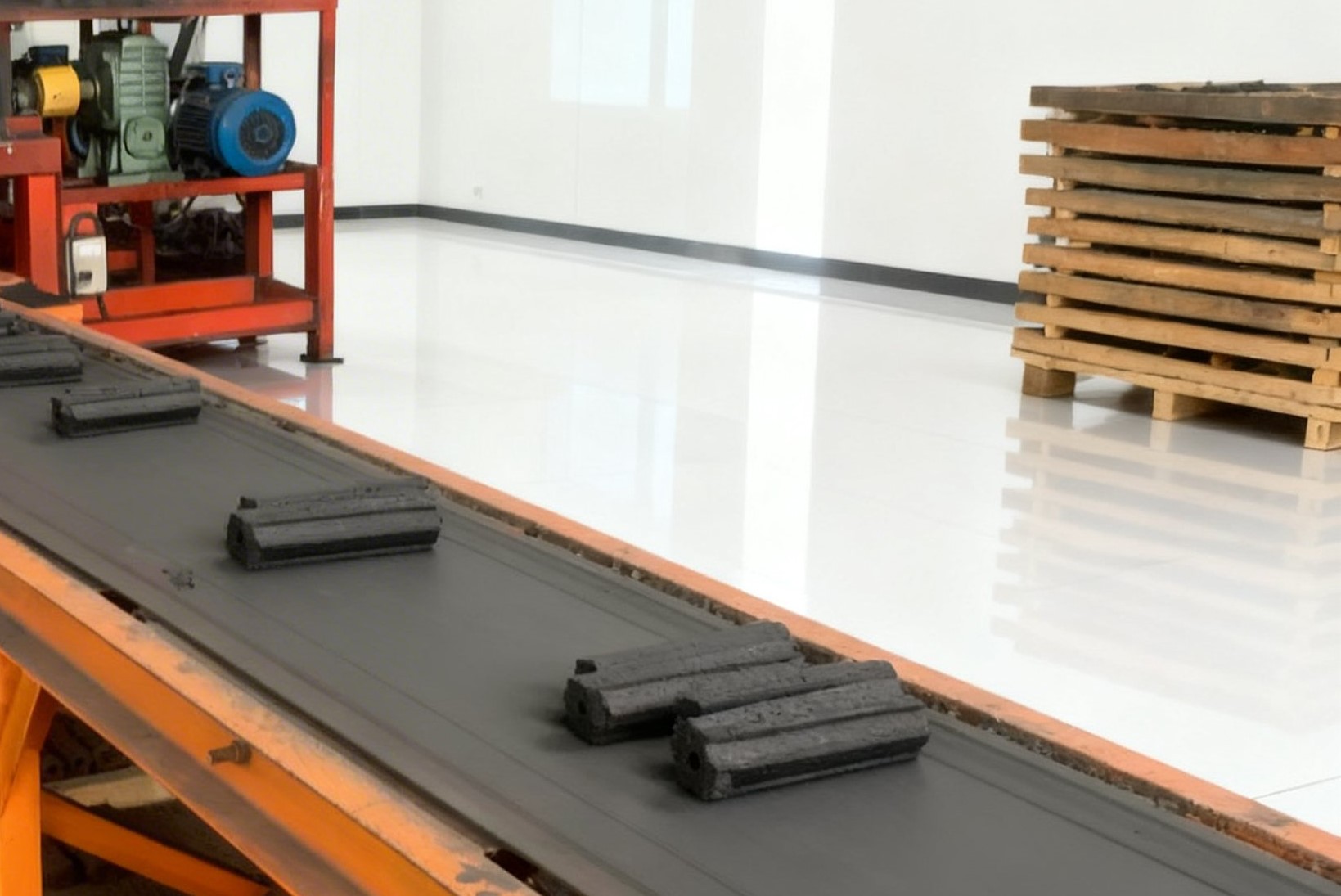
Subsequently, the wet mixture enters the high-pressure extrusion machinery for shaping. The extruder compresses the paste into uniform cubes or hexagon shapes. Thus, high pressure increases the burning duration of the final product.
In addition, precise cutting machines slice the extruded logs into exact commercial dimensions. This automated process ensures consistency in size and weight across all batches. Therefore, packaging becomes much more efficient.
Furthermore, high compaction density prevents the briquettes from crumbling during handling. Customers appreciate solid briquettes that do not produce messy dust. Consequently, modern extrusion machines play a vital role in quality.
- Hydraulic pressing technology.
- Custom mold selections.
- Automatic slicing mechanisms.
- Density optimization standards.
Industrial Drying Methods for Moisture Control
Finally, the wet briquettes must lose their moisture content in specialized drying ovens. Manufacturers typically dry the blocks at controlled temperatures for up to twenty-four hours. As a result, this process prevents mold growth during storage.
On the other hand, natural sun drying remains an alternative for some smaller facilities. However, industrial ovens provide more consistent results regardless of changing weather conditions. Therefore, large factories prefer automated drying rooms.
Moreover, lowering the moisture content below five percent ensures easier ignition. Users can light the briquettes quickly without using dangerous liquid starters. Thus, proper drying directly improves customer satisfaction.
- Automated drying chambers.
- Moisture level testing.
- Temperature curve monitoring.
- Dehumidification systems.
Strict Quality Control and Burning Tests
Indeed, testing the moisture content ensures the briquettes burn efficiently without producing smoke. Quality control teams use precise moisture meters to verify the dryness of each batch. Thus, only products with low moisture levels proceed to the packaging line.
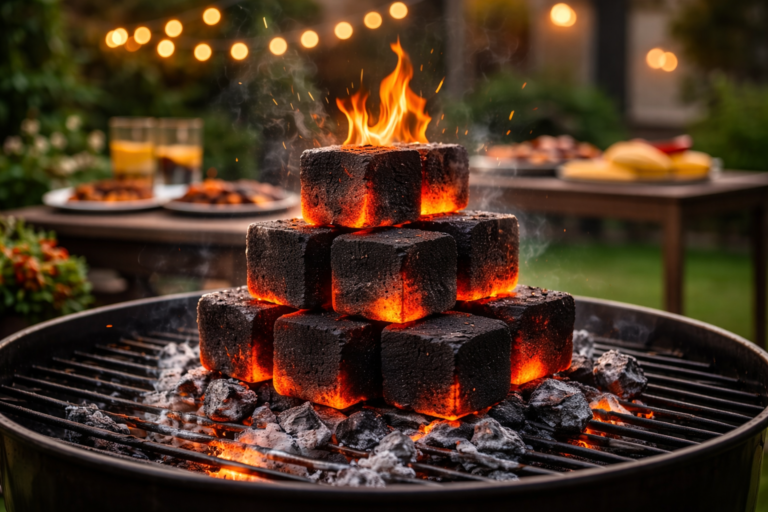
Moreover, technicians perform regular burn tests to evaluate the ash color and heat output. White or light grey ash indicates a highly pure product without impurities. Therefore, buyers can trust the premium quality of the final fuel.
Additionally, they measure the total burning time to guarantee long-lasting performance. Premium briquettes must burn for at least five hours continuously. Consequently, rigorous testing maintains high brand reputation.
- Calorific value measurements.
- Ash content analysis.
- Drop testing for durability.
- Burning time validation.
Eco-Friendly Packaging and Shipping Logistics
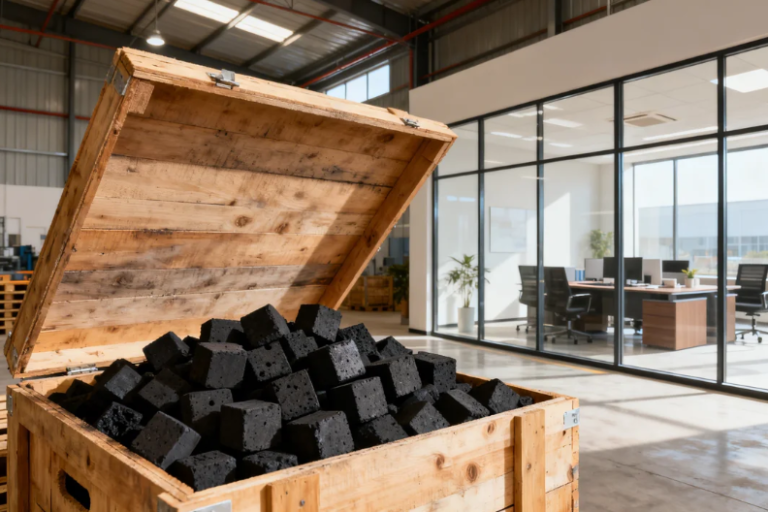
Furthermore, the packaging process must protect the briquettes from moisture absorption during transit. Factories use double-walled cardboard boxes with plastic inner linings. Consequently, the products remain dry and intact throughout the long shipping journey.
In addition, sustainable brands prefer recyclable materials for their outer packaging. This choice reduces plastic waste and appeals to eco-conscious consumers worldwide. Therefore, green logistics practices enhance the overall value of the product.
Alternatively, shipping containers must have proper ventilation to prevent heat accumulation. Safe shipping practices protect the cargo from accidental ignition risks. Hence, logistics teams plan every route with extreme caution.
- Inner plastic lining protection.
- Double-walled corrugated cardboard.
- Custom branding options.
- Palletized shipping preparation.
Frequently Asked Questions
However, many new buyers often ask about the safety of these charcoal briquettes. Standard briquettes contain zero chemicals, making them perfectly safe for indoor grilling. Therefore, you do not have to worry about toxic fumes.
Additionally, clients frequently inquire about the minimum order quantities for international shipping. Wholesale suppliers usually export in full container loads to optimize shipping costs. Thus, buying in bulk remains the most cost-effective option.
Consequently, if you need a reliable fuel supplier, we offer premium custom manufacturing. Our team handles everything from raw material processing to final export. Therefore, please contact us today to discuss your specific requirements.
- Chemical-free guarantee.
- Flexible wholesale orders.
- Custom packaging design.
- Worldwide shipping support.
Premium Coconut Briquette
Konsultasi GRATIS via WhatsApp: 081330309180
Website: https://premiumcoconutbriquette.com/