How to Successfully Export Charcoal Briquette Europe Markets Demand
European companies actively seek sustainable energy solutions to meet their carbon reduction goals. Thus, local distributors constantly look for ways to export charcoal briquette Europe standards require. Indeed, this specific trade flow supports green energy initiatives across several western countries. Therefore, you must learn the exact specifications to execute a successful export charcoal briquette.
Strict Quality Requirements for International Shisha Markets
European buyers demand premium quality because they use briquettes for residential heating and shisha. Furthermore, they pay premium prices only when your products meet their expectations. Consequently, you must monitor the ash content during production.
Additionally, global customers prefer briquettes with low moisture levels. High moisture reduces burning efficiency. Thus, you must dry the raw material thoroughly before pressing it.
Similarly, we must ensure high fixed carbon content in every batch. This chemical property determines how long the charcoal burns. Therefore, exporters must conduct laboratory tests regularly.
- Ash content below 2.5 percent.
- Burning time exceeding 2 hours.
- Moisture content under 6 percent.
- Fixed carbon above 80 percent.
Sustainable Production Processes and Eco-Friendly Sourcing
Western consumers prioritize environmental preservation over cheap prices. Therefore, manufacturers must source coconut shells from sustainable plantations. Indeed, this ethical sourcing creates a positive brand image.
Moreover, you should avoid using harmful chemical binders. Natural binders like tapioca starch keep the product safe for indoor use. Consequently, your briquettes will not produce toxic gases.
However, maintaining consistency in green manufacturing requires modern technology. You need efficient carbonization kilns to reduce greenhouse emissions during processing. Hence, investing in better machinery benefits your long-term business.
- Use of 100 percent natural ingredients.
- Zero chemical additives or binders.
- Eco-friendly carbonization methods.
- Sourcing from ethical smallholder farmers.
Logistical Challenges and Safe Shipping Compliance
Shipping charcoal presents unique safety hazards due to self-heating risks. Consequently, shipping lines require a valid self-heating test report before loading. Thus, you must obtain a Vanning Certificate from accredited surveyors.
Furthermore, proper packaging prevents moisture absorption during the ocean transit. You should use double-walled cartons with inner plastic liners. Therefore, the product arrives in perfect condition at European ports.
Meanwhile, you must declare the cargo correctly to avoid customs delays. International customs officers inspect these shipments thoroughly. Indeed, compliance with maritime safety laws secures your trade route.
- Valid MSDS (Material Safety Data Sheet).
- SHT (Self-Heating Test) certificate.
- Heavy-duty carton packaging.
- Proper container stuffing procedures.
Effective Packaging and Branding for Retail Markets
Retailers in Germany or France appreciate attractive packaging that explains product benefits. Hence, your design must feature clear instructions in multiple languages. Moreover, sustainable packaging materials appeal to modern shoppers.
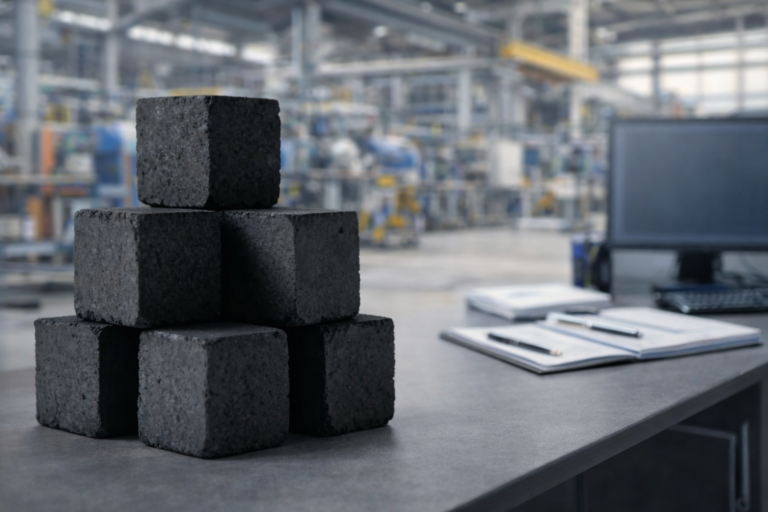
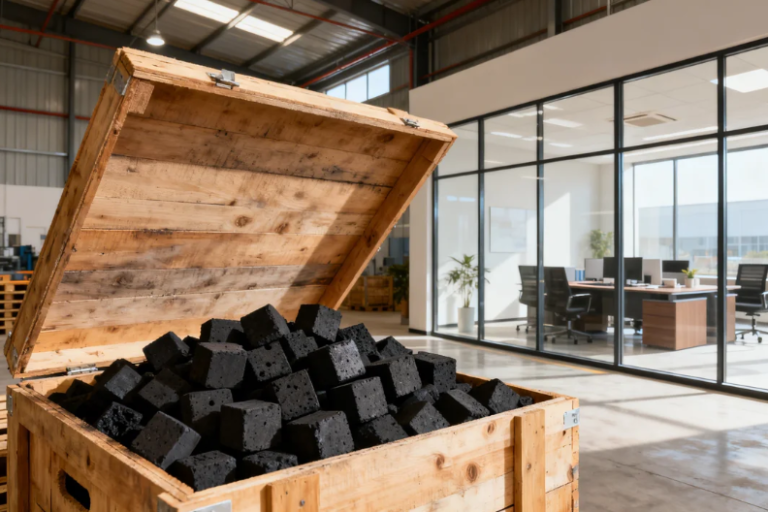
Additionally, you should offer custom sizes to fit different barbecue grills. Some customers prefer large hexagon briquettes. Meanwhile, others buy small cubes for their shisha pipes.
Consequently, matching your packaging with local preferences increases sales volume. You can work with professional designers to create eye-catching boxes. Thus, your brand establishes a strong retail presence.
- Multi-language labeling options.
- Biodegradable packaging boxes.
- Customized cube or finger sizes.
- Clear safety warnings and usage guides.
Global Pricing Strategy and Payment Terms
Setting competitive prices remains crucial in the international market. However, you must calculate raw material and logistic costs accurately. Therefore, a solid pricing formula prevents financial losses.
Furthermore, secure payment methods protect both sellers and buyers. Most European importers prefer Telegraphic Transfer or Letters of Credit. Consequently, clear payment terms foster long-term business partnerships.
Indeed, establishing mutual trust takes time and consistent performance. You should offer reasonable trial order sizes to new clients. Thus, they can test your product quality without high financial risk.
- FOB and CIF pricing flexibility.
- Letter of Credit payment options.
- Discounts for bulk container orders.
- Transparent cost breakdowns for clients.
Ensuring Supply Chain Consistency and Reliability
Importers value reliable suppliers who can deliver containers on a regular schedule. Thus, raw material shortages can ruin your business reputation. Therefore, you should establish contracts with multiple local coconut farmers.
Furthermore, keeping safety stock in your warehouse prevents unexpected delays. Rainy seasons can slow down the drying process of coconut shells. Consequently, smart planning guarantees continuous production.
Meanwhile, you must maintain strict quality control from the first step to the last. Trained inspectors should check the density of the briquettes. Indeed, consistent density ensures steady heat distribution.
- Backup raw material suppliers.
- Climate-controlled storage facilities.
- Daily quality control checklists.
- Regular machine maintenance schedules.
Key Certifications and Market Access Requirements
Entering European ports requires specific documentation that proves your product safety. For instance, REACH registration remains highly important for chemical substances in Europe. Therefore, exporters must check if their briquettes require this registration.
Furthermore, third-party laboratory test reports build trust with potential clients. Recognized agencies like SGS or Bureau Veritas can audit your production. Consequently, buyers will feel confident in your claims.
Additionally, having a registered trademark protects your brand from copycats. You can register your brand locally and internationally. Thus, your long-term market presence remains highly secure.
- REACH registration compliance.
- SGS quality test certificates.
- Factory audit reports.
- International trademark registration.
Optimizing Production Efficiency and Cost Management
To maximize your profits, you must reduce waste during the production process. For instance, recycling fine charcoal dust back into the mixer saves materials. Therefore, smart waste management lowers your average costs.
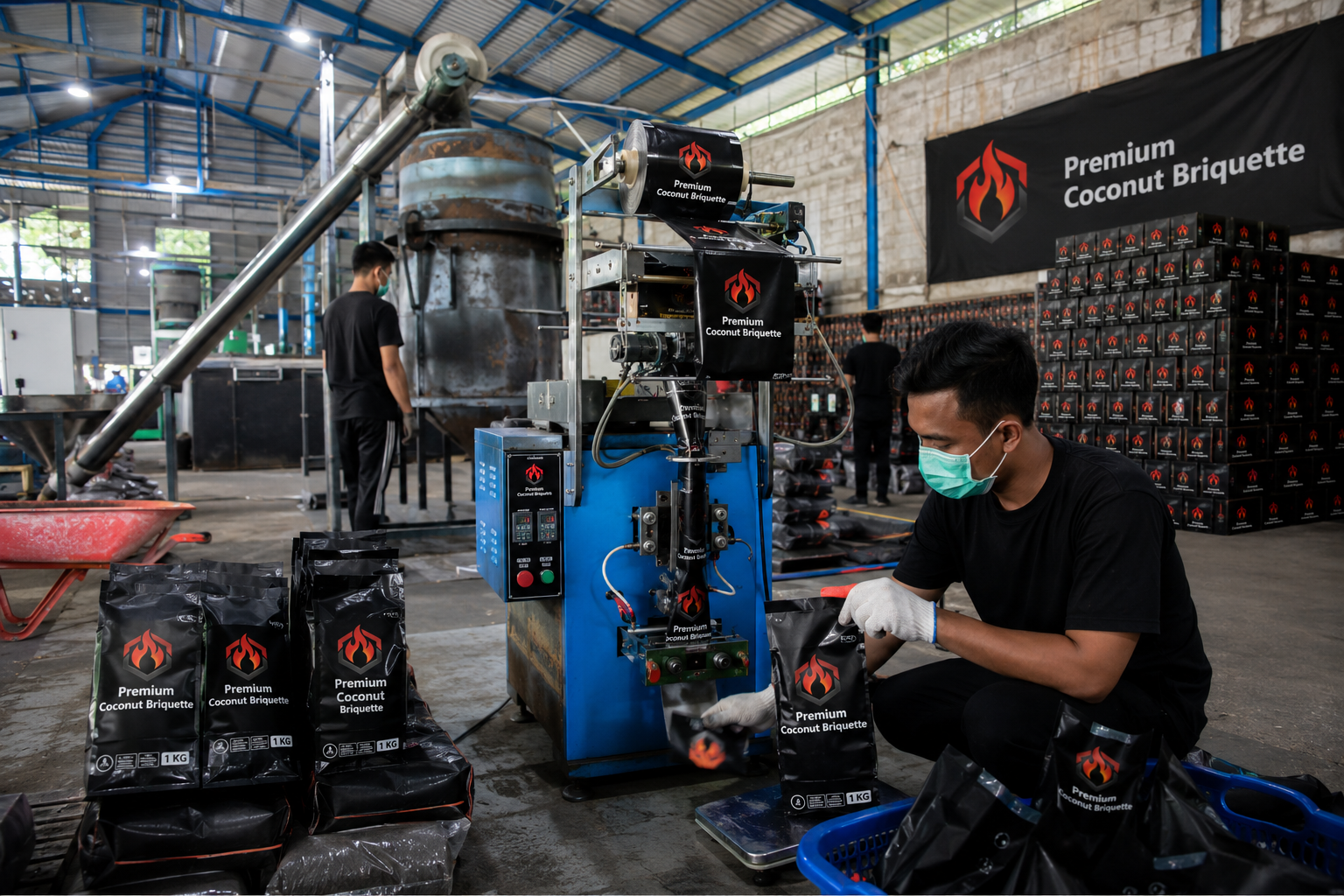
Moreover, automatic packing machines speed up the delivery process significantly. Manual packaging often causes delays and increases labor expenses. Consequently, upgrading your factory machines ensures better efficiency.
Meanwhile, regular maintenance prevents unexpected machine breakdowns during peak seasons. You should create a strict schedule for checking the extruder nozzles. Thus, your production line operates smoothly.
- Dust recycling systems.
- Automatic packing lines.
- Extruder nozzle maintenance.
- Energy-efficient ovens.
Building Long-Term B2B Partnerships with European Distributors
Establishing strong relationships with international buyers requires excellent communication skills. For example, you must respond to emails within twenty-four hours. Therefore, hiring professional customer service agents helps your business grow.
Additionally, sending regular production updates builds deep trust with your clients. You can share photos of their actual cargo being loaded. Consequently, buyers feel secure about their investments.
However, you must handle product quality complaints professionally if they arise. Offering replacement options demonstrates your commitment to customer satisfaction. Indeed, honesty transforms a single transaction into a lifelong partnership.
- Fast response communication channels.
- Regular production photo updates.
- Professional complaint handling protocols.
- Loyalty discounts for repeat clients.
Frequently Asked Questions About Global Trade
How long does the shipping process usually take?
Usually, shipping to major European ports takes about thirty to forty-five days. However, custom clearance procedures can add several days to this timeline. Therefore, you must prepare all documents early.
Can we customize the shape of the briquettes?
Yes, modern factories can produce cubes, fingers, and hexagon shapes easily. Indeed, manufacturers use custom molds to satisfy specific customer demands. Consequently, you can target diverse market segments.
What is the minimum order quantity for shipping?
Generally, most exporters require a minimum order of one full container. This strategy keeps shipping costs per unit very low. Thus, buyers get the best possible value.
- Shipping transit times.
- Customized product shapes.
- Minimum order quantities.
- Payment security options.
Premium Coconut Briquette
Konsultasi GRATIS via WhatsApp: 081330309180
Website: https://premiumcoconutbriquette.com/